
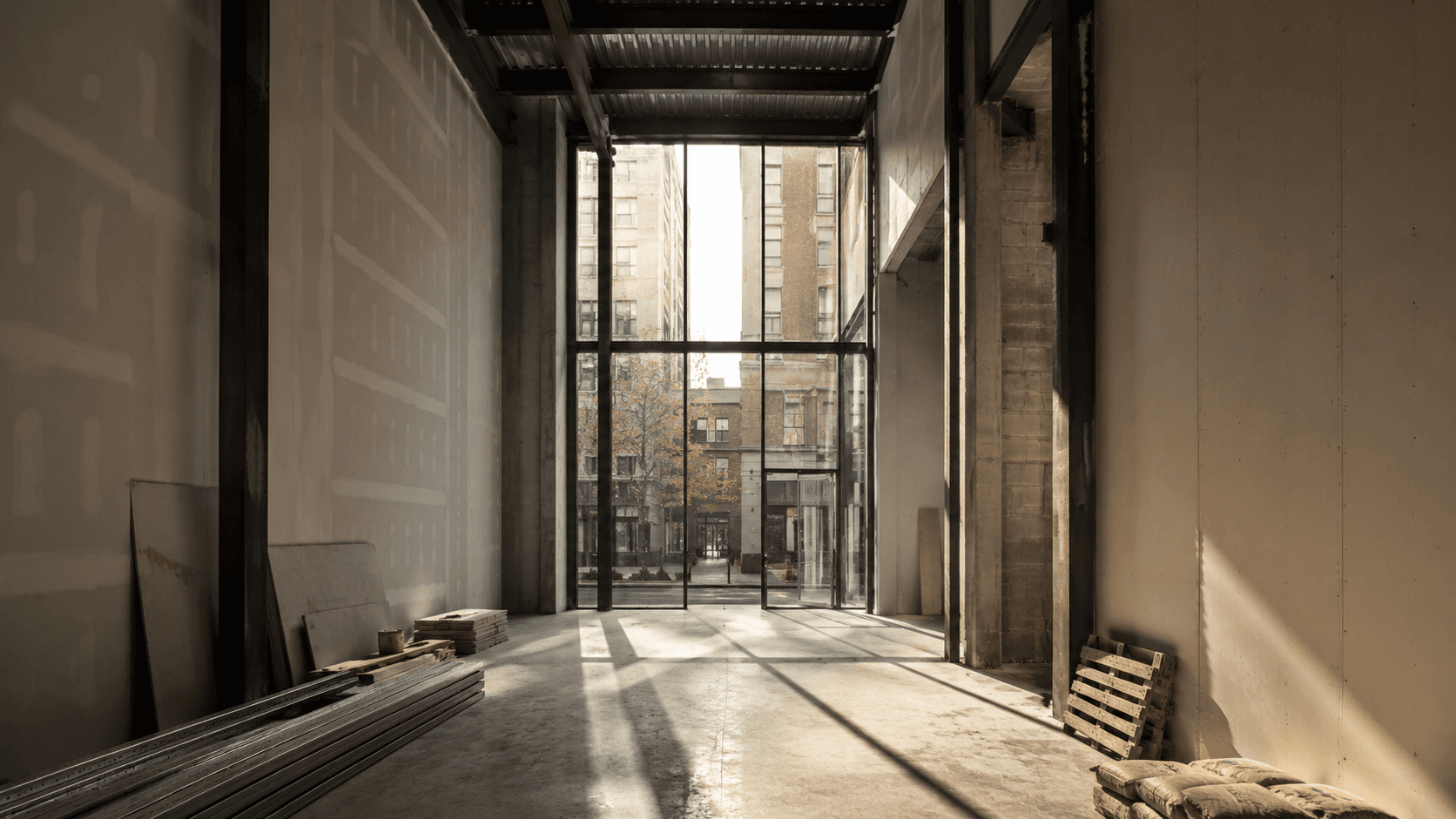
Every brand is on a rung. We build the next one up.
Most people in this business categorise brands by what they sell — apparel, jewellery, footwear, beauty, lifestyle — but in our experience the more useful frame is what rung of the physical-retail ladder a brand is on, because the construction problem on each rung is materially different from the one before it, and a partner who is good at the rung above yours is worth far more than a partner who happens to specialize in your category. The five rungs below cover most of the brands we talk to.
- 01
On someone else's shelves
Your brand reaches US customers through wholesale, dealers and distributors, which means the construction problem belongs to the retailers stocking you rather than to your own team — until the day you decide that needs to change.
- 02
Your space in their store
You operate a concession or shop-in-shop inside a host retailer such as Nordstrom, Saks or Bloomingdale's, which gives you your own fixtures and your own staff but inside someone else's four walls, on their criteria package, with their install windows.
- 03
Your first own store
The first time you sign a lease in your own name and take on the work-letter exhibits, the permit timeline, the base-building turnover and the certificate of occupancy — usually a pop-up, a showroom or a first permanent location in a market where your concession is already producing.
- 04
Your fleet
A multi-store program, anywhere from five to fifty locations, where the same prototype opens in parallel across multiple markets and the work shifts from one-off project management to portfolio-level cost and schedule discipline.
- 05
Your flagship
An experiential, brand-led location that sits above the rest of the fleet on every dimension — square footage, finish budget, AV and lighting, press, event programming — and which usually requires a different design partner, a different lease, and a different construction conversation altogether.
If you happen to be crossing a national border at the same time as you're moving up a rung — which describes a large proportion of the work we take on — then there is a second translation problem running in parallel, which involves converting your home-market design intent and brand standard into US-buildable construction documents, US-sourced finishes and US-compliant work-letter and permit submissions, and we run both of those translations as part of the same program.
Three starting points on the same ladder.
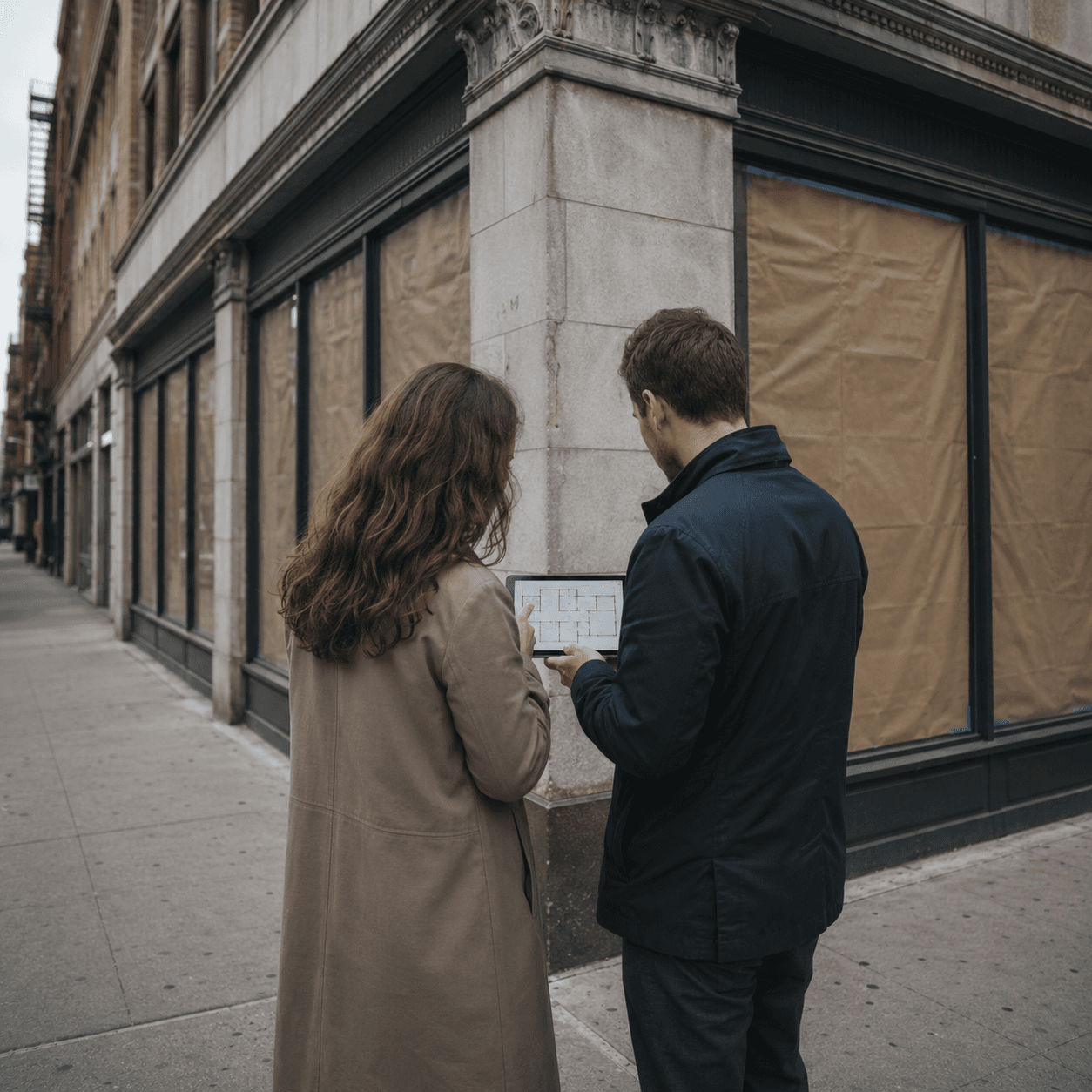
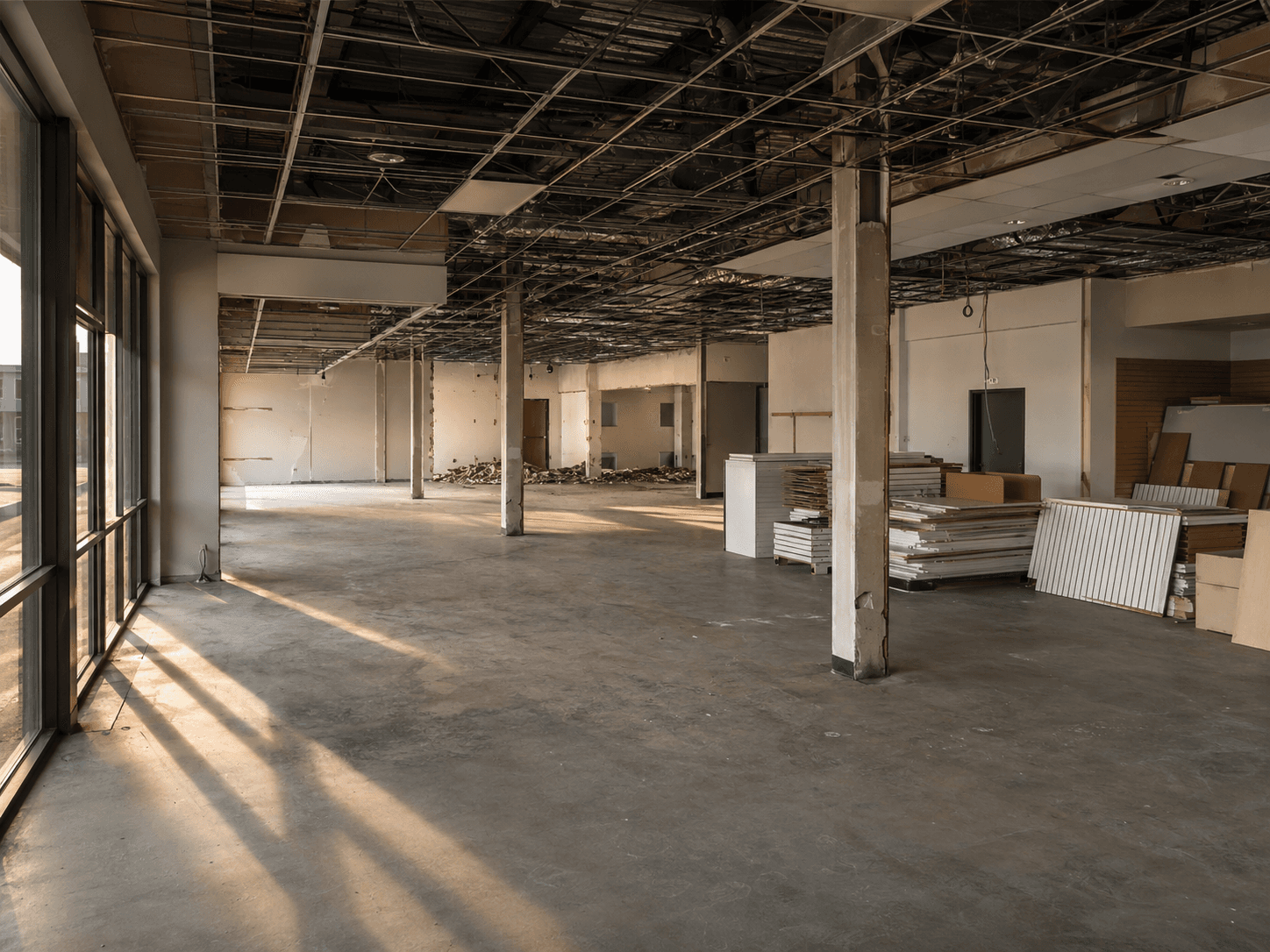
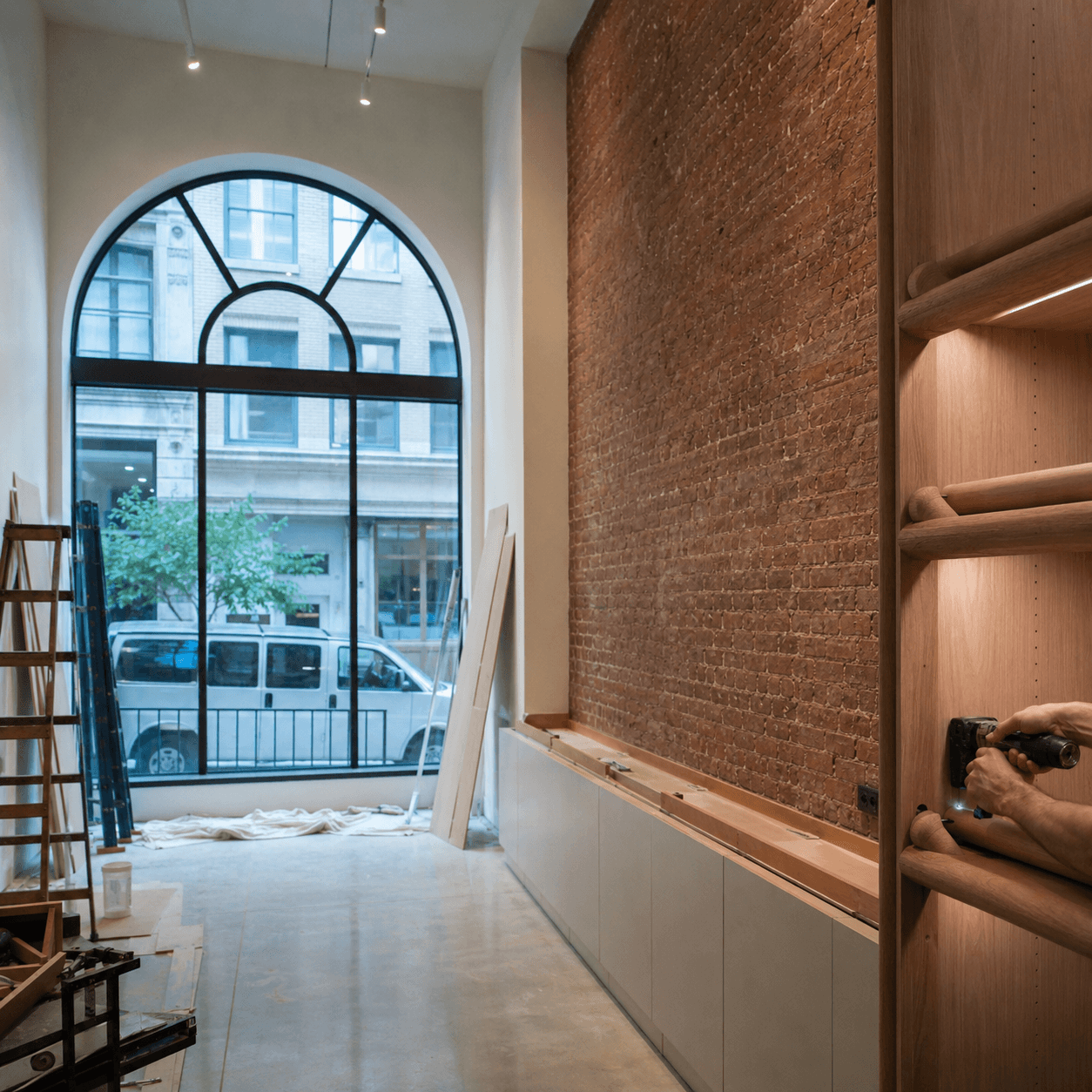
The brands we work with don't come to us because they fit a neat industry segment; they come to us because they are about to take a step they have never taken before, in a system they don't yet know well. The three card profiles below are the starting points we see most often, and the underlying delivery discipline is the same in each case — what changes is the counterparty (landlord, host retailer, or your own internal team) and the order in which the work happens.
Seven services. Built to run as a program.
Retail General Contracting
Single-store buildouts, end to end.
Learn moreMulti-Site Rollout Program Management
Programs of 5 to 50 stores across multiple states.
Learn moreDepartment-Store Concessions & Shop-in-Shop
Your space inside Nordstrom, Saks, Bloomingdale's, Neiman Marcus or Macy's.
Learn morePreconstruction & Cost Planning
Defensible numbers before lease signing.
Learn moreDesign-Build
Single point of accountability for design and delivery.
Learn moreTenant Coordination & Host-Retailer Liaison
We sit between you and the landlord — or the host retailer.
Learn morePop-Up & Experiential Builds
Short-lease activations and brand showrooms.
Learn moreHow a US rollout actually unfolds.
Every brand we begin a program with sees these five phases on day one and then receives a weekly status report against them for the life of the work, and although there is a small amount of variation per market and per brand, the durations below are the ones we have actually observed across recent programs rather than the optimistic ranges a contractor will sometimes quote in a pitch. The permit step in particular is jurisdictional and not negotiable, which is why brands that compress the early phases almost always pay for that compression later.
Discovery & scoping
Brand standards review, market list, lease and work-letter review. We tell you what your program will actually cost before you sign anything.
Preconstruction
Cost planning, market-by-market permit strategy, GC and trade pre-qualification, schedule sequencing for parallel store openings.
Permitting & approvals
Alt-2 filings in NYC at 4–8 weeks. LA standard TI at 4–6 months. Filed and tracked per jurisdiction with weekly status reporting.
Construction & delivery
On-site management, trade coordination, weekly cost-to-complete reporting, brand-standard QA at every stage.
Closeout & opening
Punch list, certificate of occupancy, FF&E coordination, opening-day readiness, post-occupancy fine-tuning in the first 90 days.
The numbers we can stand behind.
Almost every US retail GC publishes a stat strip with numbers like “projects delivered”, “states covered” and “decades in business”, and almost none of those numbers survive contact with a serious vendor onboarding form — so we publish only what we can defend with either a delivered project or an operational practice that we genuinely run.
Practical guidance on the realities of US retail buildouts.
The US retail buildout playbook for international brands
A lease-to-opening checklist for brands opening their first US stores. Covers permitting by market, work-letter review, MEP and millwork translation, GC selection, schedule of values and a 90-day pre-opening runbook.
How long do retail permits take in the top 10 US markets?
A market-by-market table of typical retail TI permit timelines — NYC, LA, Miami, Chicago, Dallas, Houston, Atlanta, San Francisco, Boston, Seattle. With the filing types that matter and the failure modes that blow the schedule.
What does a US retail buildout actually cost in 2026?
Range-based benchmarks for specialty retail buildouts at $500K to $2M per store. National averages, market premiums for NYC and LA, what drives the spread, and what the published surveys leave out.
The kind of work we take on.
The list to the right covers the project types we routinely take on, which sit in the $500K–$2M-per-store range for specialty retail and rise into the multi-million range for flagships and ground-up work. If your program looks materially different from any of these shapes — for example a quick service restaurant rollout, a department-store ground-up build or a small refresh below our minimum engagement — we will tell you on the first call rather than pretend the fit is closer than it actually is.
- 01Flagship buildouts
- 02Multi-state specialty retail rollouts (5–50 stores)
- 03DTC brand first-store programs
- 04Pop-up and seasonal experiential builds
- 05Showroom and brand-touchpoint stores
- 06Lease-controlled second-generation TI
Have a US store program in the works?
The intake form below asks for the markets you are considering, the date you need to be open, and a few sentences on where the program sits today, and on receiving it we will read what you have sent, ask a single follow-up question if anything is unclear, and come back inside two business days with a one-page scoping memo and a slot for a twenty-minute scoping call. There is no charge for any of that, and there is no implied obligation to engage us afterwards.