
A heritage apparel brand, on the path from shelf to store.
Picture a heritage apparel brand a generation old. They started selling through dealers. They graduated into concessions inside the major US department stores — a few Nordstroms first, then Saks, then Bloomingdale's. Each concession is a few hundred square feet of their fixtures inside the host's box.
The next step is their own four walls — a flagship in a market where the concessions are already producing. It's a different problem than the concessions, but it uses the same fixture kit, the same brand standard and the same operating discipline you've already built inside someone else's store.
We build that next step. We hold the rung you're on and we build the one above it.
Five realities every brand meets when they graduate from someone else's shelves.
Host-retailer criteria and your own brand standard pull in different directions
Each of the major host retailers — Nordstrom, Saks, Bloomingdale's, Neiman Marcus, Macy's and the equivalent regional groups — publishes a criteria package that prescribes finish standards, fixture specifications, signage rules, install windows, freight access and overnight working conditions, all of which exist to protect the host's adjacency standards rather than to express your brand, and the practical skill of the work is building a single kit of parts that satisfies the host's criteria, expresses your brand standard, and doesn't have to be re-engineered every time you open a new concession in a new department.
You have never actually operated your own four walls
When you operate inside a host retailer, the host handles the lease, the building services, the security, the after-hours environmental controls, the customer-facing POS infrastructure and most of the back-of-house operating discipline; when you sign a lease in your own name, all of those responsibilities transfer to your team for the first time, and the first standalone is therefore not simply a larger version of a successful concession but a meaningfully different operating problem that happens to use the same fixtures and the same brand standard.
Lease and work-letter exposure on a first standalone is unfamiliar territory
A brand whose entire US presence to date has been concession-based has rarely had reason to read a full US retail lease or its work-letter exhibits in detail, and those exhibits are precisely where US landlords routinely move scope onto the tenant — base-building MEP capacity upgrades, ADA path-of-travel work in common areas, life-safety modifications, signage rights, sometimes minor structural reinforcement — which is why the most important hour spent on the first standalone is usually the hour spent reviewing the work letter with a US construction adviser before the lease is signed, rather than the hour spent on it after.
A fixture kit built for a concession will not, as drawn, work in a standalone
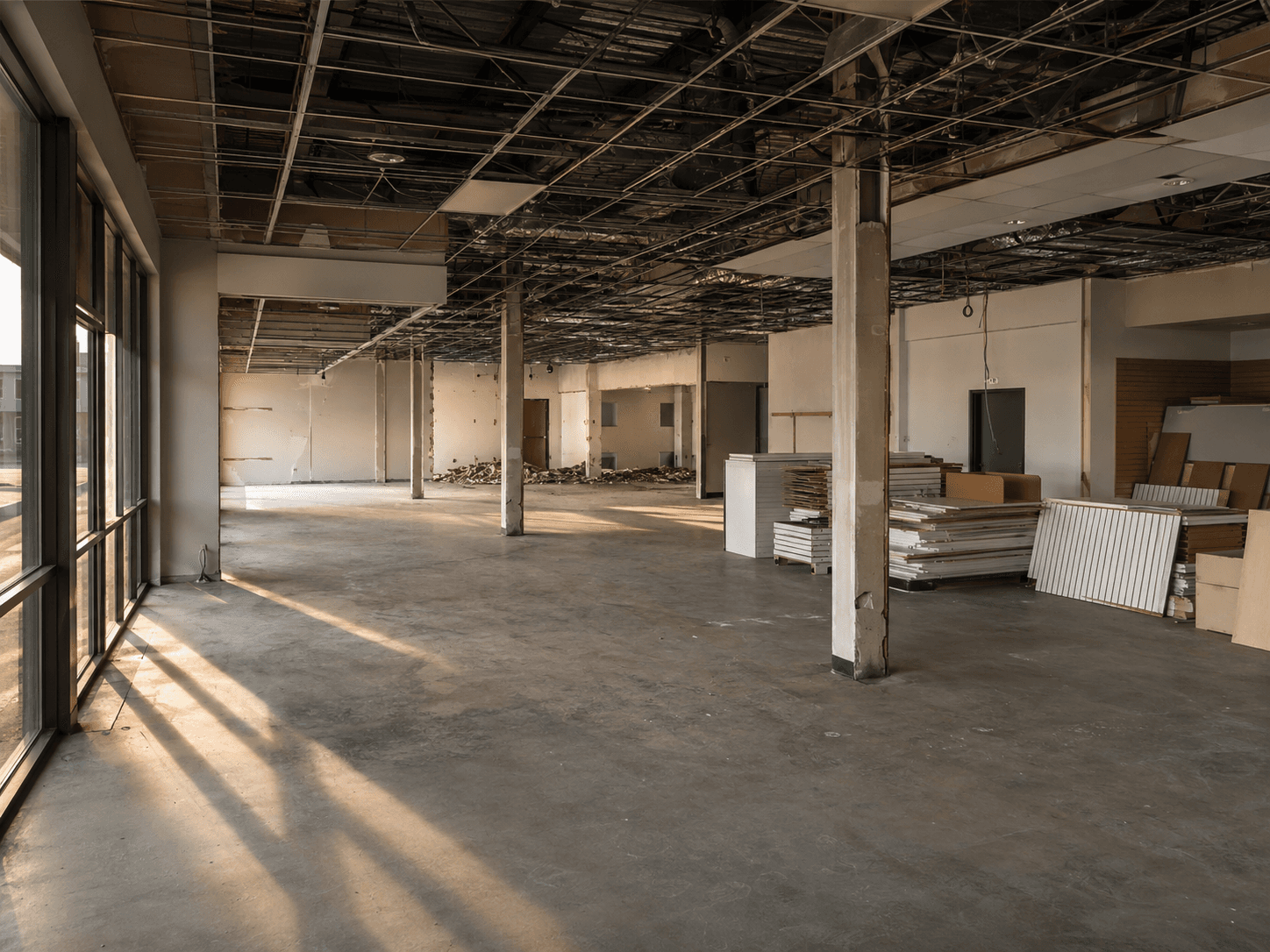
Inside a host retailer the box, the ceiling, the HVAC and the building services all belong to the host, and the brand only has to ship and install its fixtures into a known and consistent envelope; in a standalone the brand owns the envelope as well, which means the fixture program has to cope with ceiling heights, structural conditions, HVAC routing and lighting layouts that vary materially from one leased space to the next, and the kit of parts that travels cleanly from Nordstrom to Saks needs additional engineering before it travels into a 3,500 square foot ground-floor lease on a street corner.
Sequencing a concession and a standalone in the same market is a feature, not a problem
In our experience the great majority of first standalones land in cities where the brand already runs one or two department-store concessions, which is the right shape commercially — the concessions provide operating data and brand recognition that materially de-risk the standalone — but it does require the concession's install schedule, the host retailer's overnight working windows, and the standalone's construction window to be sequenced so that the same trades, the same brand-side team and the same local management aren't being asked to do two things at once.
A scope written for the concession-to-standalone path, not retrofit from new-store playbooks.
- Host-retailer criteria-package compliance — kit-of-parts designed to satisfy the host and express your brand
- Fixture and millwork program built once, scaled across host retailers and standalones
- Work-letter review and lease-readiness diagnostic for the first standalone
- Construction documents that translate concession fixture intent into standalone build scope
- Sequencing concession installs and standalone construction in the same market
- Single point of accountability across the host-retailer footprint and the owned-retail program
Same translation discipline that delivered Cullen Jewellery's five-city US rollout.
Cullen's rollout solved the cross-border version of this problem — an Australian brand standard translated into US-buildable construction documents, with finishes sourced locally to a single kit-of-parts that traveled across San Francisco, Los Angeles, San Diego, Houston and Toronto.
The concession-to-standalone path uses the same mechanism applied to a different threshold. Different counterparty (host retailer vs. landlord), same discipline of building one kit of parts that works across multiple boxes — whether the boxes are Nordstrom departments or your own leased stores.
We are good at delivery. We say no to everything else.
- We are not a wholesale buying-team agency. We don't open accounts at Nordstrom or Saks for you — we build the space once you've earned the deal.
- We are not a brand strategy firm. Your visual standard is yours; we translate it into US-buildable construction documents and a fixture kit that ships.
- We are not a real-estate broker. We work with your broker on lease and host-agreement diagnostics, but the deal is theirs.